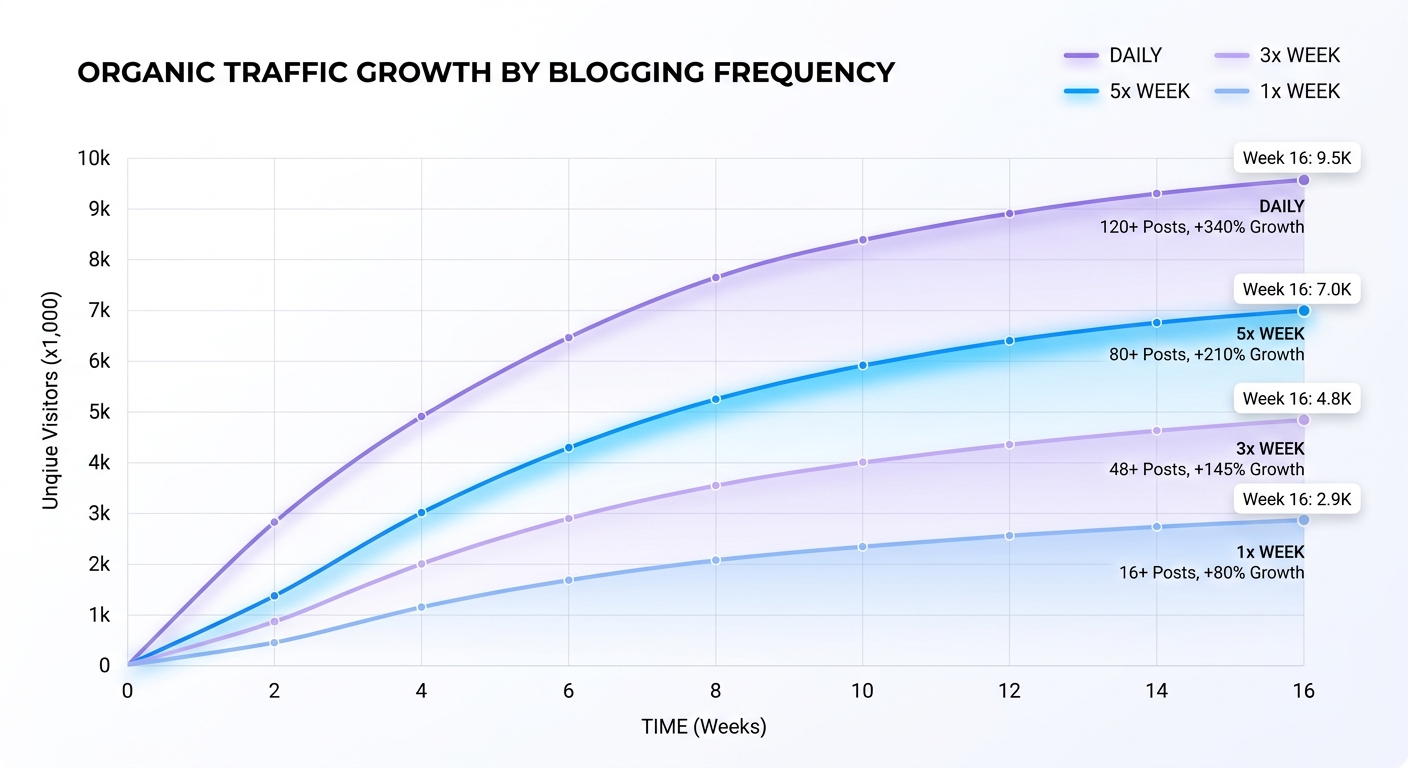
For most blogs targeting organic growth in 2026, publishing 3–5 high-quality posts per week is the sweet spot backed by the strongest data. Sites that hit this cadence consistently see 2–3x more organic traffic within six months compared to those publishing once a week. The catch? Maintaining that pace manually is brutal — which is exactly why the conversation has shifted from “how often” to “how sustainably.”
What the Data Actually Says About Blogging Frequency
Here’s a number that should grab your attention: HubSpot’s long-running benchmark study found that companies publishing 16+ blog posts per month receive 3.5x more traffic than those publishing 0–4 posts monthly. Orbit Media’s 2025 blogger survey confirmed the trend — bloggers who publish multiple times per week are significantly more likely to report “strong results” than weekly or monthly publishers.
But raw frequency alone doesn’t explain the full picture. Google’s crawl behavior rewards sites that demonstrate consistent freshness signals. When you publish regularly, Googlebot returns more often, indexes new content faster, and begins treating your domain as a reliable source of topical coverage. A site publishing four posts per week builds topical authority faster than one drip-feeding a post every ten days — assuming comparable quality.
The Diminishing Returns Threshold
More isn’t always better. The data shows a clear inflection point around 5–7 posts per week. Beyond that, most teams see quality degrade unless they have robust editorial processes. Thin, repetitive content actually hurts rankings. The goal is to find the highest sustainable frequency your operation can maintain without cutting corners on depth, originality, or SEO fundamentals.
Why “Once a Week” Is No Longer Enough
Five years ago, publishing one solid post per week was considered respectable. In 2026, it’s a recipe for stagnation — and the reason is simple: your competitors aren’t doing that anymore.
The average first-page result on Google now exists within a cluster of 15–30 supporting articles on the same site. Topical authority isn’t built by one pillar page and a prayer. It’s built by comprehensive coverage — hitting every subtopic, every long-tail variation, every related question your audience might ask. One post per week gives you 52 articles in a year. At 4 per week, you have 208. That’s not just more content — it’s a fundamentally different level of topical coverage that Google rewards with broader keyword visibility.
The Compounding Effect of Consistent Publishing
Blog traffic compounds. Each indexed article is a new entry point from search. A site with 200 well-interlinked articles captures exponentially more long-tail queries than one with 50. The math is straightforward, but the execution gap is enormous — which is why most bloggers plateau at the once-a-week pace and wonder why traffic flatlines after month six.
The Real Bottleneck: It’s Not Strategy — It’s Execution
Most content marketers already know they should publish more. The problem isn’t awareness — it’s capacity. Writing a genuinely useful, well-researched, SEO-optimized blog post takes 3–6 hours. Multiply that by four or five posts per week, and you’re looking at a full-time job just for content creation — before you even touch promotion, analytics, or strategy.
This is the bottleneck that kills blogging consistency. You start strong in January, hit three posts a week for a month, then life happens. Client work piles up. The freelancer ghosts you. By March, you’re back to one post every two weeks, and your organic momentum evaporates.
The Hidden Cost of Inconsistency
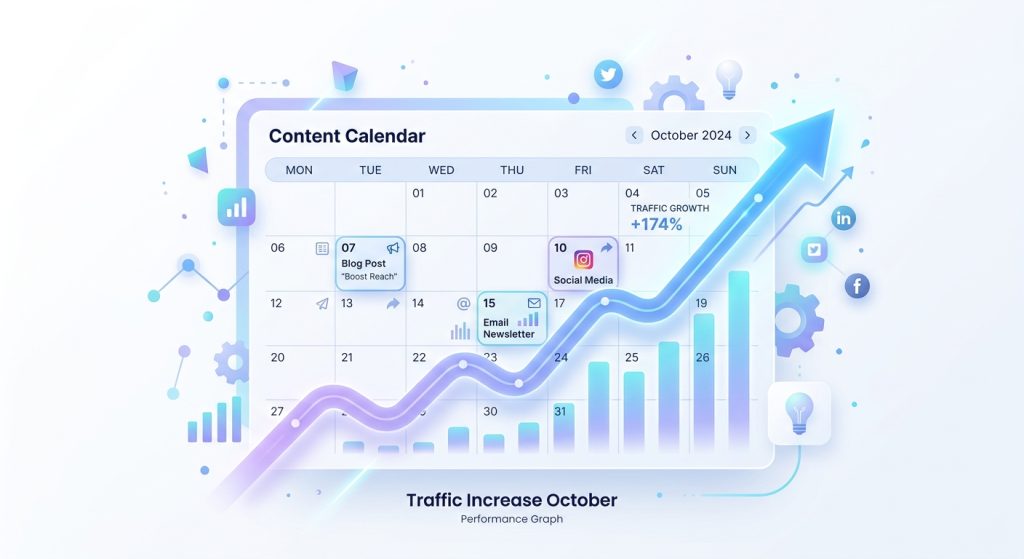
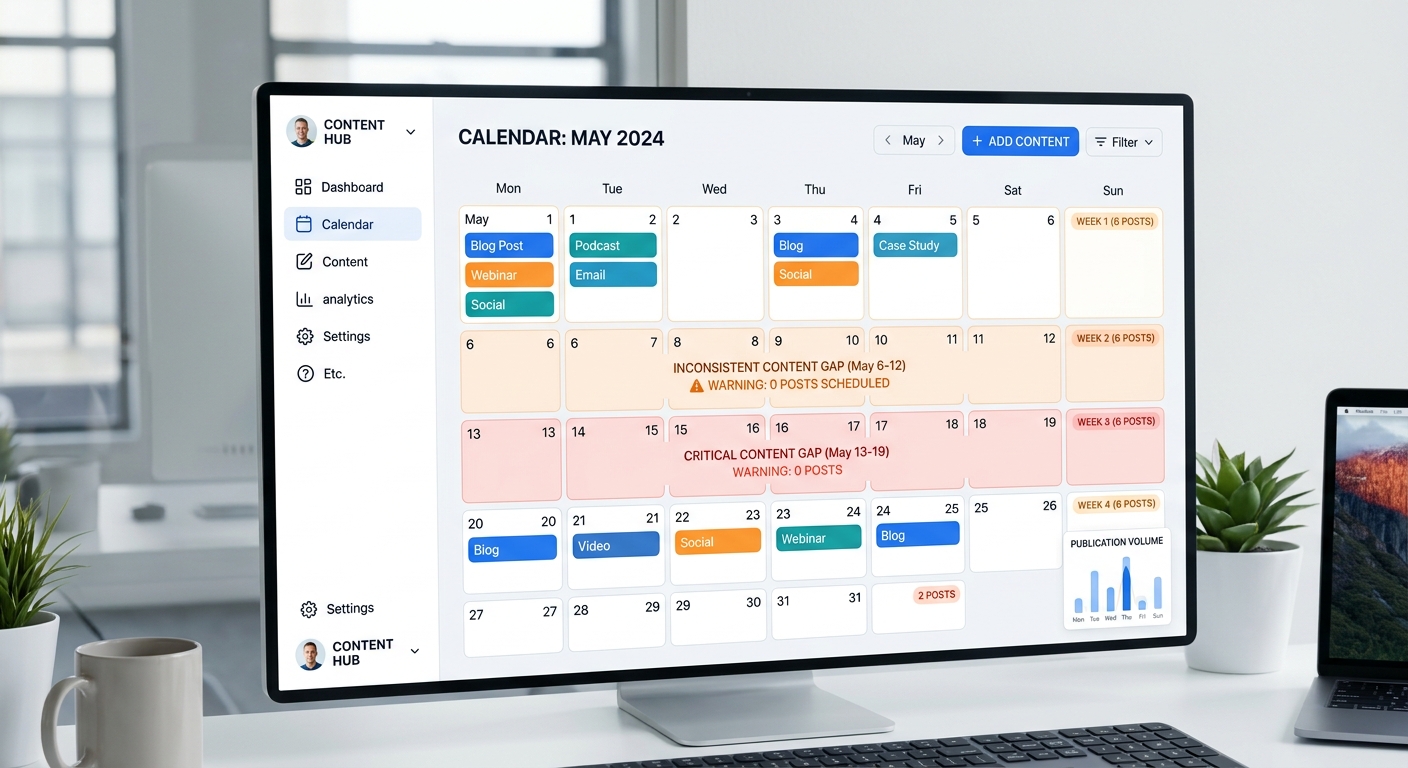
Inconsistent publishing doesn’t just slow growth — it actively undermines it. Google’s freshness signals work both ways. A site that published aggressively for two months then went quiet sends a signal that the domain may be abandoned or deprioritized. Crawl frequency drops. Rankings for existing content can slip. The feast-and-famine publishing pattern is worse than a steady, modest cadence because it trains search engines to distrust your publishing rhythm.
Frequency Benchmarks by Blog Type
Your ideal frequency depends on your goals, your niche, and your resources. Here’s where the data points for different scenarios:
Niche/Affiliate Sites
Aim for 4–5 posts per week during the growth phase (first 6–12 months). Niche sites live or die by topical coverage. The faster you fill content gaps across your target keyword clusters, the sooner Google treats you as the authority. Once you’ve covered the core topics comprehensively, you can drop to 2–3 per week for maintenance and expansion into adjacent topics.
SaaS and B2B Company Blogs
3–4 posts per week is the high-performance range. Focus on a mix of bottom-of-funnel comparison content, mid-funnel educational guides, and top-of-funnel thought leadership. The key differentiator here is internal linking structure — every new post should strengthen the overall site architecture by linking to relevant product pages and related articles.
Agency-Managed Client Blogs
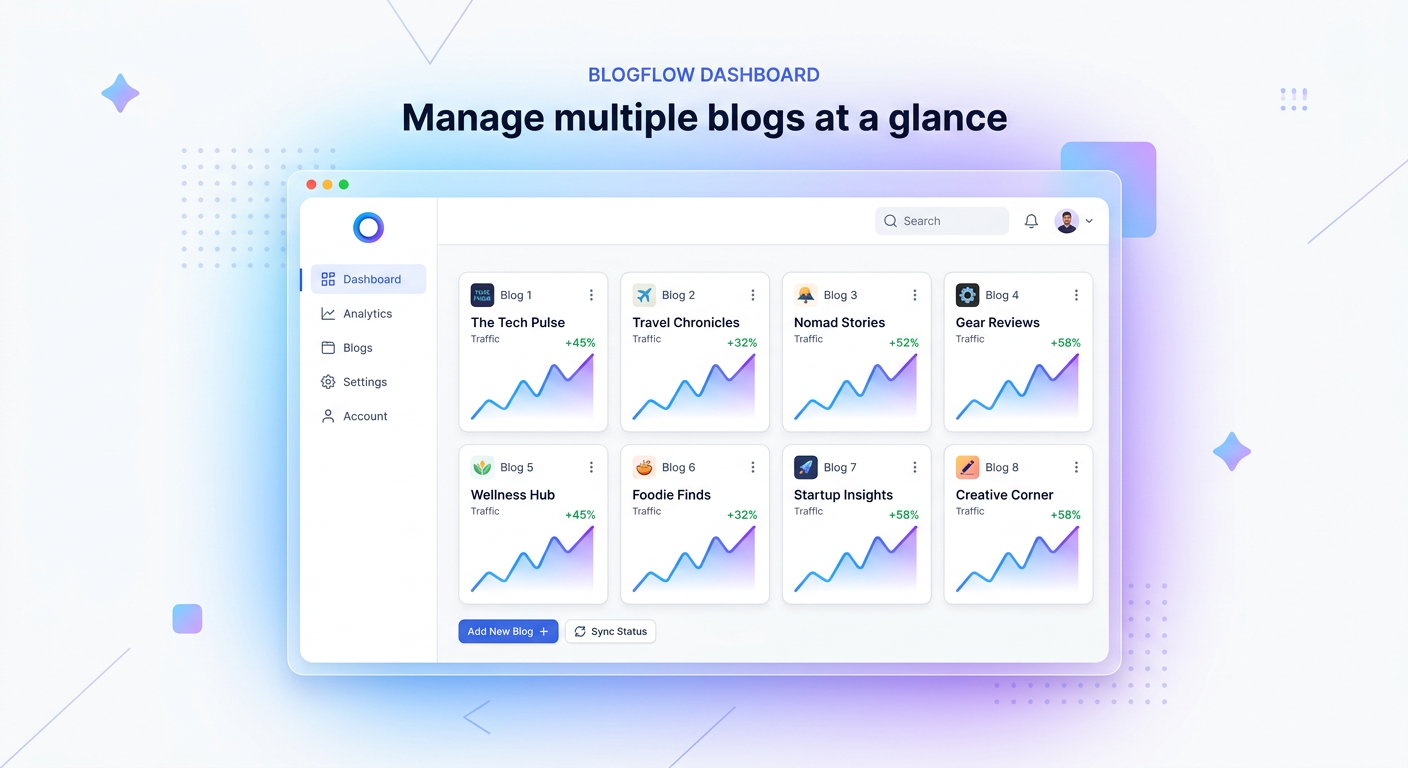
For agencies managing multiple client blogs, the math gets brutal fast. If you’re running 8 client blogs at 3 posts per week each, that’s 24 articles weekly. Manual production at that scale requires a large writing team and serious editorial oversight. This is precisely the scenario where AI-powered blog autopilot tools become not just helpful but essential for maintaining quality at volume.
Personal and Hobby Blogs
1–2 posts per week is perfectly fine if growth isn’t your primary metric. But if you’re trying to monetize or build an audience, know that you’re competing against sites publishing at 3–5x your pace. Decide what you’re optimizing for and set expectations accordingly.
Quality vs. Quantity: A False Dichotomy in 2026
The “quality over quantity” debate is outdated. In 2026, the winning strategy is quality at quantity. Google’s helpful content system has gotten sophisticated enough to penalize thin, AI-generated filler while rewarding comprehensive, well-structured articles — regardless of how many you publish per week.
The real question isn’t whether to prioritize quality or quantity. It’s how to maintain editorial standards while scaling output. And that’s a process problem, not a philosophical one.
What “Quality” Actually Means for SEO in 2026
Quality in the current algorithm environment means three things: topical depth (covering the subject thoroughly enough that the reader doesn’t need to visit another site), structural clarity (proper heading hierarchy, scannable formatting, clear answers to search intent), and contextual linking (connecting each article to related content on your site so Google understands your topical architecture). A 1,500-word article that nails all three will outperform a 4,000-word ramble every time.
How Gap Analysis Changes the Frequency Equation
Here’s where most blogging advice falls short: it tells you how often to publish but not what to publish. Publishing five mediocre posts on random topics is worse than publishing two strategically chosen articles that fill genuine gaps in your site’s topical coverage.
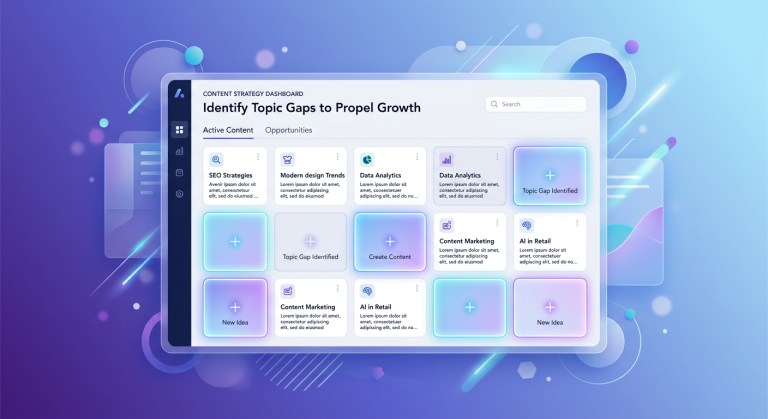
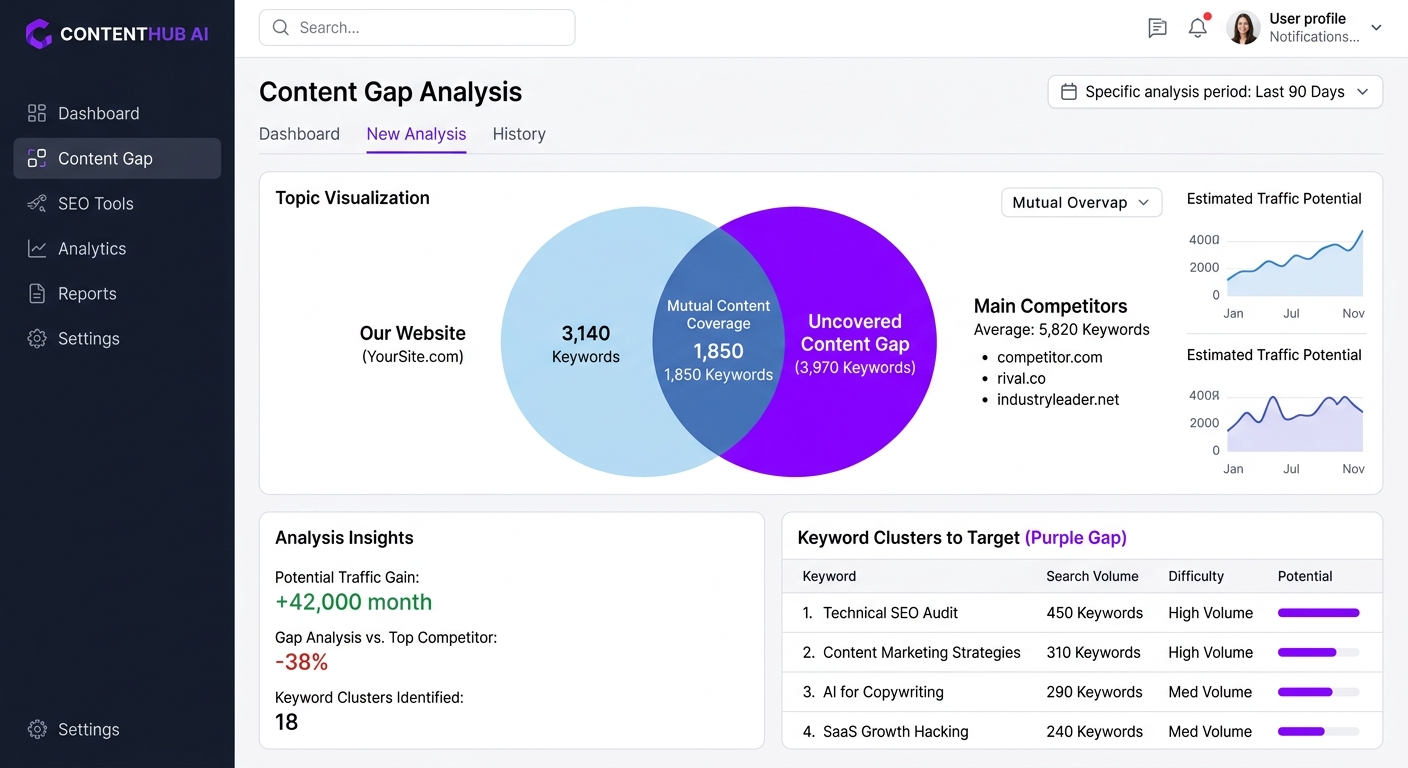
Content gap analysis — the process of identifying topics your competitors rank for that you don’t — transforms blogging frequency from a vanity metric into a strategic weapon. When every article you publish targets a verified gap, each post directly expands your keyword footprint rather than cannibalizing existing content or chasing irrelevant queries.
A Real-World Example
Consider a SaaS company running a blog about project management. They’ve published 80 articles over two years, mostly about Agile methodology and team productivity. A gap analysis reveals they have zero coverage on resource allocation, capacity planning, or project budgeting — topics their top three competitors rank for extensively. Instead of writing another generic Agile post, they now have a prioritized list of 40+ articles that will directly expand their organic reach. That’s the difference between publishing blind and publishing with a map.
Tools like MagicDraft’s content gap analysis automate this process — scanning your existing blog, comparing it against competitor coverage, and identifying exactly which topics will move the needle. It’s the difference between guessing and knowing.
The Internal Linking Multiplier Most Bloggers Ignore
Publishing frequently is only half the equation. The other half — the one most bloggers neglect — is connecting those articles into a coherent internal linking structure. Every new post should link to 3–5 relevant existing articles, and older articles should be updated to link to new ones. This creates a web of topical signals that tells Google exactly what your site is about and which pages are most important.
A site with 200 articles and strong internal linking will outrank a site with 200 articles and no linking strategy, even if the content quality is identical. Internal links distribute page authority, reduce bounce rates by guiding readers to related content, and help search engines discover and index new posts faster.
Why This Gets Harder at Scale
Here’s the pain point: manually managing internal links across hundreds of articles is a nightmare. When you publish post #150, do you remember which of your first 50 articles are topically relevant? Probably not. This is where most growing blogs develop “orphan pages” — articles with no internal links pointing to them, effectively invisible to both readers and search engines. Automated internal linking — the kind that scans your full content library and suggests contextually relevant connections — isn’t a luxury at scale. It’s a necessity.
How an Agency Scaled 8 Client Blogs to 4 Posts Per Week Each
Let’s make this concrete. A digital marketing agency managing blogs for 8 clients in different niches — home improvement, personal finance, pet care, and others — was stuck at one post per client per week. Their three-person writing team was maxed out, and hiring more writers would have destroyed their margins.
They shifted to an AI-assisted workflow: gap analysis identified the highest-value topics for each client site, automated drafts handled the research-heavy first pass, and their writers focused on editing, adding unique insights, and ensuring brand voice consistency. Within three months, they scaled to 4 posts per client per week — a 4x increase — without adding headcount.
The Results
After six months at the higher cadence, average organic traffic across the 8 client sites increased by 127%. Three clients hit page-one rankings for competitive head terms they’d never ranked for before. The agency’s content production cost per article dropped by roughly 60%, and client retention improved because the results spoke for themselves.
This isn’t an outlier story. It’s the predictable outcome of combining strategic topic selection with sustainable high-frequency publishing. If you’re curious about the economics, MagicDraft’s pricing page breaks down what this kind of automation actually costs compared to a traditional writing team.
Building a Sustainable Publishing Schedule: A Practical Framework
Knowing the ideal frequency is useless if you can’t sustain it. Here’s a framework that actually works:
Step 1: Audit Your Current Capacity
How many quality posts can you realistically produce per week right now? Be honest. If it’s one, that’s your baseline — not your target.
Step 2: Identify Your Gaps
Run a content gap analysis against your top 3–5 competitors. This gives you a prioritized publishing queue so you never waste time on topics that won’t move the needle. You can do this manually with tools like Ahrefs or Semrush, or use an automated solution that does the analysis and generates the content plan for you.
Step 3: Increase Frequency Gradually
Jump from 1 to 5 posts per week overnight and quality will crater. Instead, increase by one post per week every month. Go from 1 to 2, stabilize your process, then move to 3. Each step up should feel manageable before you push further.
Step 4: Automate the Repeatable Parts
Topic research, first-draft generation, internal link insertion, meta description writing, WordPress publishing — these are all tasks that AI handles well in 2026. Your human expertise should focus on editorial judgment, unique insights, and brand voice. If you want to see how this kind of automation works end-to-end, MagicDraft’s FAQ page covers the most common questions about the workflow.
Step 5: Measure and Adjust
Track three metrics monthly: total organic sessions, number of indexed pages ranking in the top 100, and average position for target keywords. If increasing frequency correlates with improvement across all three, keep pushing. If quality metrics (bounce rate, time on page) start declining, you’ve found your ceiling — pull back one notch and hold.
Your Publishing Frequency Is a Competitive Moat — Treat It Like One
The sites dominating organic search in 2026 aren’t necessarily the ones with the best writers or the biggest budgets. They’re the ones that figured out how to publish high-quality content at a pace their competitors can’t match — and sustain it month after month.
The data is clear: 3–5 posts per week is the range where organic growth accelerates meaningfully. Below that, you’re leaving traffic on the table. Above that, you need serious infrastructure to maintain quality. The real unlock isn’t working harder — it’s building a system that makes consistent, strategic publishing the default rather than the exception.
If your blog is stuck at one post a week and your traffic has plateaued, the diagnosis is straightforward. You need to publish more, publish smarter, and publish consistently. MagicDraft was built for exactly this problem — analyzing your content gaps, generating deeply researched articles, and publishing them directly to WordPress so your blog grows on autopilot. The question isn’t whether you should blog more often. It’s whether you’ll build the system to make it happen.