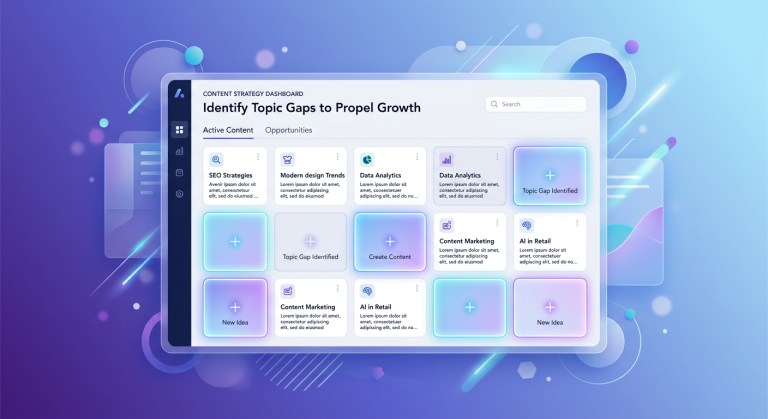
Content gap analysis solves the “blank editorial calendar” problem by systematically comparing your existing content against what competitors rank for — then surfacing every topic you’re missing. It’s not brainstorming. It’s data-driven topic discovery that reveals dozens (sometimes hundreds) of high-intent keywords your site should cover but doesn’t. If you’ve ever stared at a content calendar with nothing to add, the issue isn’t that you’ve run out of ideas — it’s that you’ve been relying on intuition instead of analysis, and the topics your audience is actively searching for are hiding in plain sight.
Why “Running Out of Ideas” Is Actually a Data Problem
Most bloggers hit a wall around the 30–50 post mark. They’ve covered the obvious topics, recycled a few angles, and now every brainstorm session ends with “we already wrote about that.” But here’s the thing: the average niche has hundreds of rankable long-tail keywords that never show up in a casual brainstorm. You’re not out of ideas. You’re out of visible ideas.
The human brain is terrible at systematically mapping a topic space. We think in clusters — the 10 or 15 subtopics that feel obvious — and then assume we’ve covered everything. Meanwhile, your competitors are ranking for questions your audience is asking that you never considered.
The Real Cost of Missing Topics
Every topic gap is leaked traffic. If a competitor ranks for “best WordPress caching plugins for WooCommerce” and you only have a generic caching guide, you’re losing a reader who was ready to trust your site. Multiply that across 50 or 100 missing topics, and you’re looking at thousands of monthly visits that flow to someone else’s domain. Worse, those gaps compound: fewer pages mean fewer internal linking opportunities, weaker topical authority signals, and slower domain-wide ranking improvements.
What Content Gap Analysis Actually Does (Step by Step)
Content gap analysis isn’t a vague concept — it’s a specific, repeatable process. Here’s what happens under the hood:
- Crawl your existing content. Every URL on your site gets inventoried, and the primary keyword each page targets (or should target) is identified.
- Identify competitor domains. You pick 3–5 competitors (or an automated tool picks them based on keyword overlap).
- Pull competitor keyword profiles. Every keyword each competitor ranks for in positions 1–20 gets extracted.
- Subtract your keywords. Any keyword you already rank for is removed from the list.
- Filter and prioritize. The remaining keywords are scored by search volume, keyword difficulty, commercial intent, and topical relevance to your site.
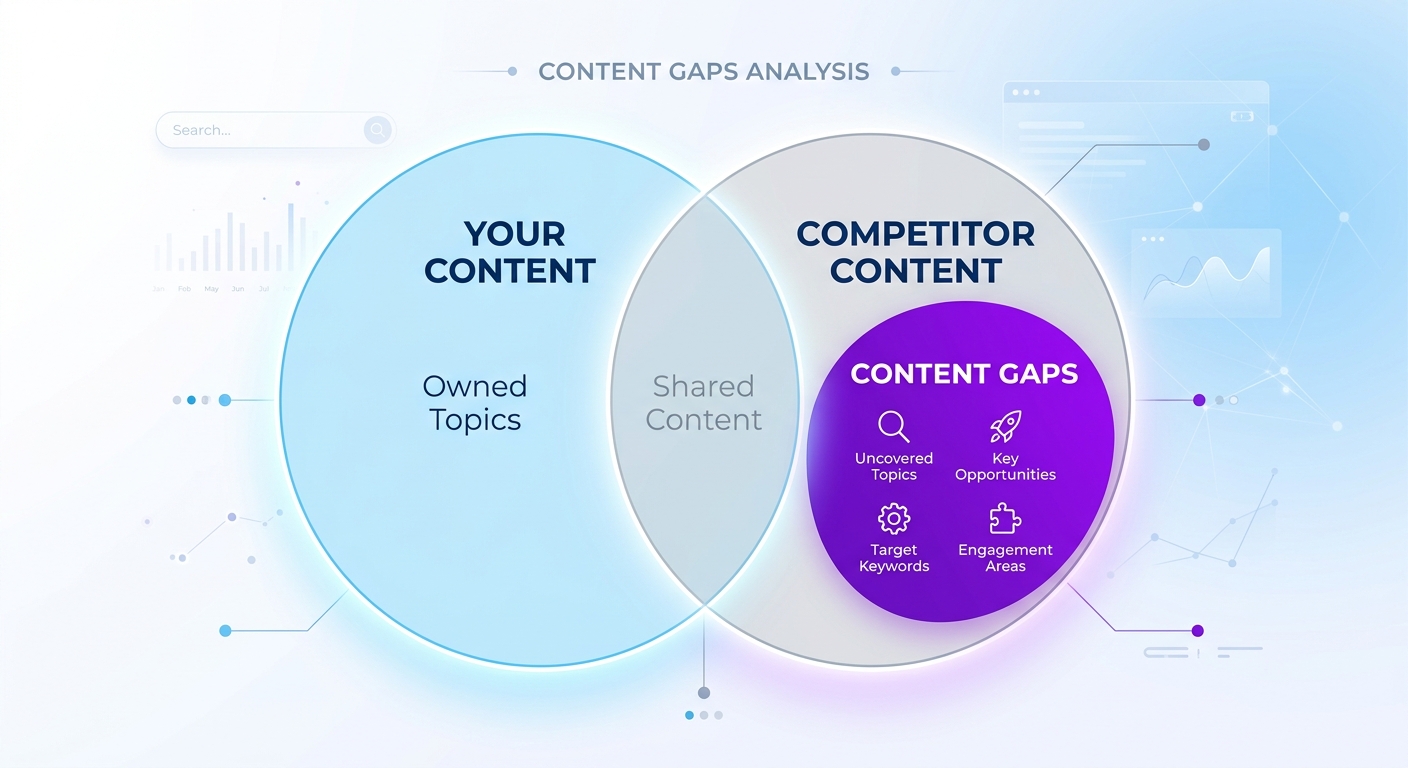
What you’re left with is a prioritized list of topics your competitors cover that you don’t. Not random blog ideas — validated, search-demand-backed topics with proof of concept (someone is already ranking for them).
Gap Analysis vs. Keyword Research: They’re Not the Same
Traditional keyword research starts with a seed keyword and expands outward. It’s useful, but it’s limited by the seeds you choose. Gap analysis works in reverse: it starts with what’s already working for others and filters back to what you’re missing. Think of keyword research as exploring from the inside out, and gap analysis as mapping from the outside in. You need both, but gap analysis catches the topics keyword research misses because you never thought to search for them in the first place.
The Five Types of Content Gaps Most Sites Have
Not all gaps are created equal. Understanding the type of gap helps you prioritize which ones to fill first.
1. Topic Gaps
You simply haven’t written about a subject at all. A pet supplies blog might have 20 articles on dog nutrition but zero on dog dental care — an entire subtopic cluster left untouched.
2. Intent Gaps
You’ve covered the topic, but only for one search intent. You have an informational guide on “how email marketing works” but no comparison post for “best email marketing tools” — missing the commercial intent entirely.
3. Depth Gaps
Your page exists, but it’s thin. Competitors have 2,500-word comprehensive guides while you have a 600-word overview. Google sees theirs as more authoritative, and they outrank you.
4. Freshness Gaps
Your content was accurate in 2023 but hasn’t been updated. Competitors published refreshed 2026 versions and took your rankings.
5. Format Gaps
Competitors rank with listicles, comparison tables, or how-to walkthroughs for queries where you only have a narrative essay. Format matters because Google matches format to intent.
A thorough gap analysis catches all five types. Most manual brainstorming only catches the first one — if you’re lucky.
A Real-World Example: How a Niche Site Found 137 Missing Topics in 10 Minutes
Consider a real scenario: a solo blogger running a home office furniture review site with about 80 published posts. They felt tapped out. Every desk, every chair, every monitor arm — covered. Or so they thought.
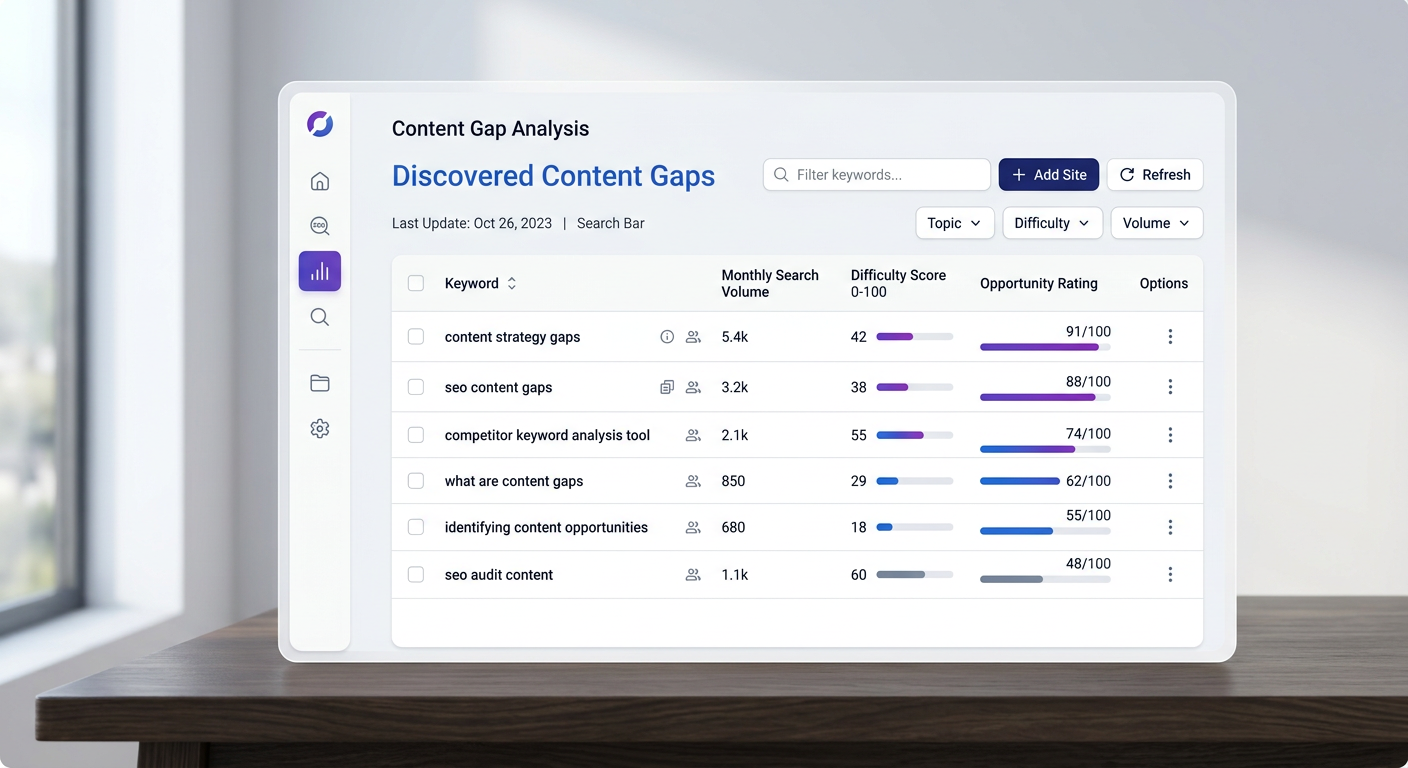
After running a content gap analysis through MagicDraft, the tool compared their site against four competing review blogs and surfaced 137 keyword gaps. Some were obvious misses — they had no content on standing desk converters, cable management solutions, or ergonomic footrests. But the real gold was in the long-tail: “best desk for small apartments under $200,” “L-shaped desk vs U-shaped desk,” “how to set up dual monitors on a small desk.”
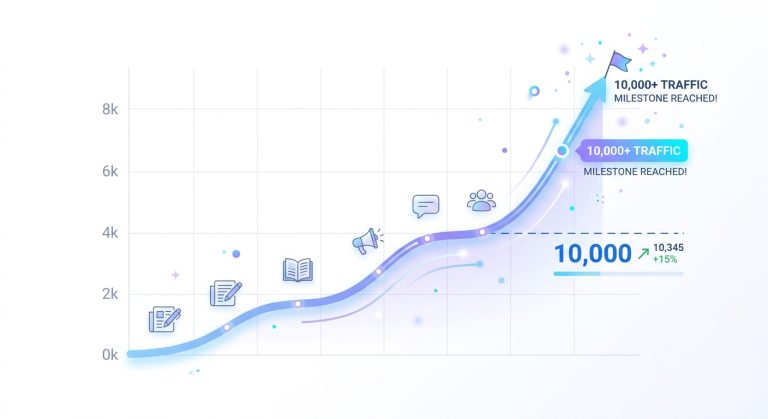
These weren’t obscure queries. Each had 300–2,000 monthly searches, and the keyword difficulty scores were low enough to rank within 60 days. The blogger prioritized the top 20 by opportunity score, and MagicDraft auto-generated and published the first batch within a week. Within three months, organic traffic increased 41% — not from any single viral post, but from filling dozens of small gaps that collectively drove consistent search visits.
Why This Works Better Than Brainstorming
The blogger would never have brainstormed “L-shaped desk vs U-shaped desk” as a standalone article. It sounds too niche. But 1,400 people a month search for it, the top results are mediocre forum threads, and a well-structured comparison post can rank in the top 3 within weeks. Gap analysis surfaces these hidden opportunities that intuition misses.
How to Run a Content Gap Analysis (Manual vs. Automated)
You can do this manually. It just takes a painful amount of time.
The Manual Method
Export your Google Search Console data. Export competitor keyword data from Ahrefs, Semrush, or a similar tool. Dump everything into a spreadsheet. Use VLOOKUP or pivot tables to find keywords competitors rank for that don’t appear in your data. Filter by volume and difficulty. Manually review each keyword for relevance. Build a content brief for each one. Assign it to a writer. Repeat every quarter.
This works. It’s also 4–8 hours of tedious spreadsheet work per site, and most people do it once, get overwhelmed by the output, and never follow through.
The Automated Method
Tools like MagicDraft collapse this entire workflow into minutes. Connect your WordPress site, and the tool crawls your existing content, identifies your actual competitors based on keyword overlap (not who you think your competitors are), and surfaces gaps ranked by opportunity score. The difference isn’t just speed — it’s follow-through. Because MagicDraft also generates the content and publishes it directly to WordPress, the gap between “finding the topic” and “having a live, optimized post” shrinks from weeks to hours.
Check the MagicDraft pricing plans to see which tier fits your publishing volume — whether you’re running one blog or managing a dozen client sites.
Prioritizing Gaps: Not Every Missing Topic Deserves a Post
Here’s where most people go wrong after running a gap analysis: they try to fill every gap at once, or they start with the highest-volume keywords regardless of difficulty. Both approaches waste time.
The Opportunity Score Framework
Prioritize gaps using a simple formula: Opportunity = (Search Volume × Click-Through Potential) ÷ Keyword Difficulty. A keyword with 500 monthly searches and a difficulty of 15 is almost always a better first target than one with 5,000 searches and a difficulty of 72.
Filter by Topical Relevance
Just because a competitor ranks for a keyword doesn’t mean you should. If you run a WordPress performance blog and a competitor also ranks for “best Shopify themes,” that’s not your gap to fill. Relevance filtering prevents you from diluting your topical authority by chasing tangential keywords.
Cluster Before You Write
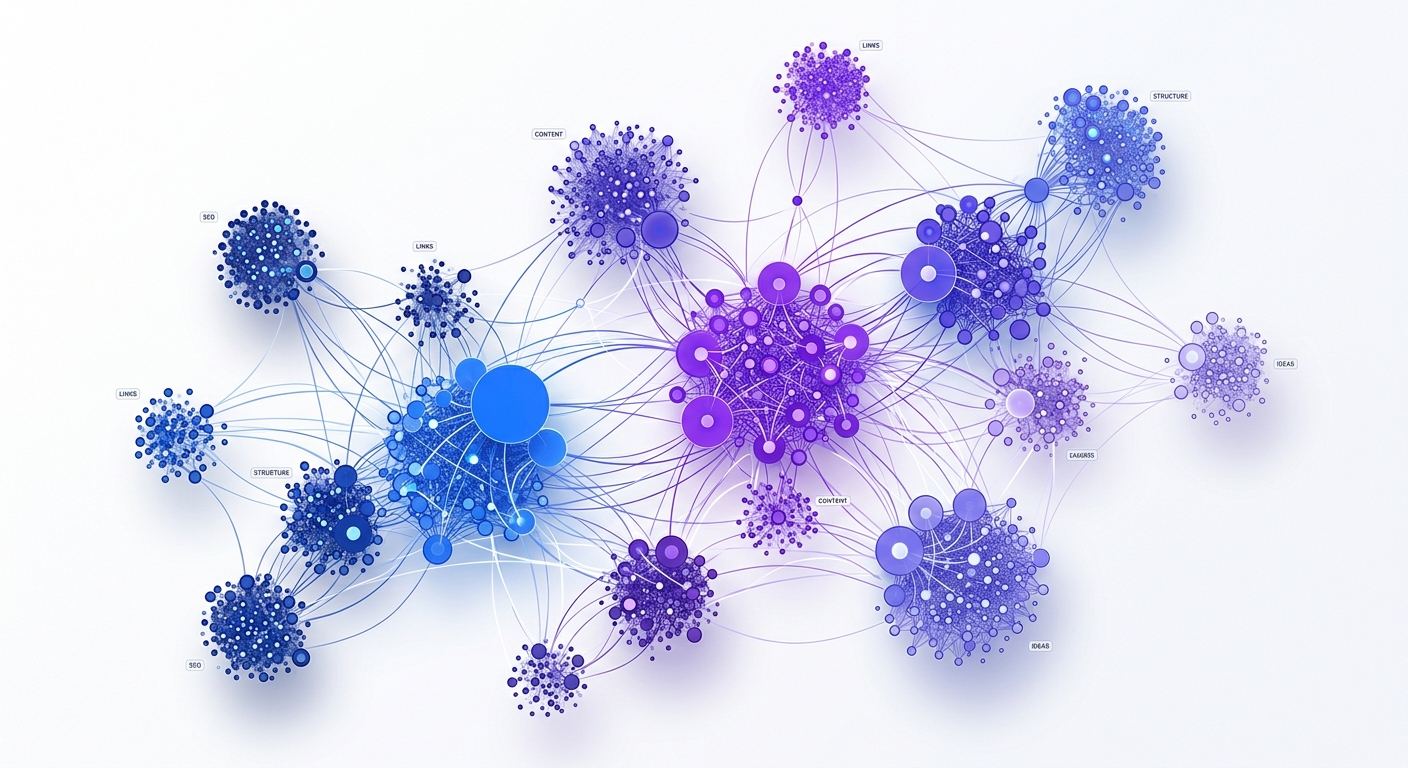
Group related gaps into topic clusters. If you’re missing “best ergonomic keyboards,” “ergonomic keyboard vs regular keyboard,” and “how to choose an ergonomic keyboard,” those are three posts in one cluster — and they should be planned together so internal links connect them from day one. This is where MagicDraft’s automated internal linking saves significant time: it identifies linking opportunities across new and existing posts as content is published.
Why Agencies Need Gap Analysis at Scale
If you manage one blog, gap analysis is valuable. If you manage eight, it’s non-negotiable.
Agency content managers face a unique version of the “out of ideas” problem: they’re not just tapped out on one site — they’re juggling editorial calendars across multiple niches, each with its own competitive landscape. Manually running gap analysis for every client every quarter is a full-time job on its own.
A Scenario: Managing Multiple Client Blogs
An SEO agency managing blogs for a SaaS company, a local dentist, and an e-commerce pet brand needs three completely different gap analyses with three different competitor sets. The SaaS client competes with HubSpot and Drift. The dentist competes with WebMD and local practices. The pet brand competes with Chewy and niche pet bloggers. Doing this manually means context-switching between industries, re-learning competitor landscapes, and spending hours in spreadsheets for each client.
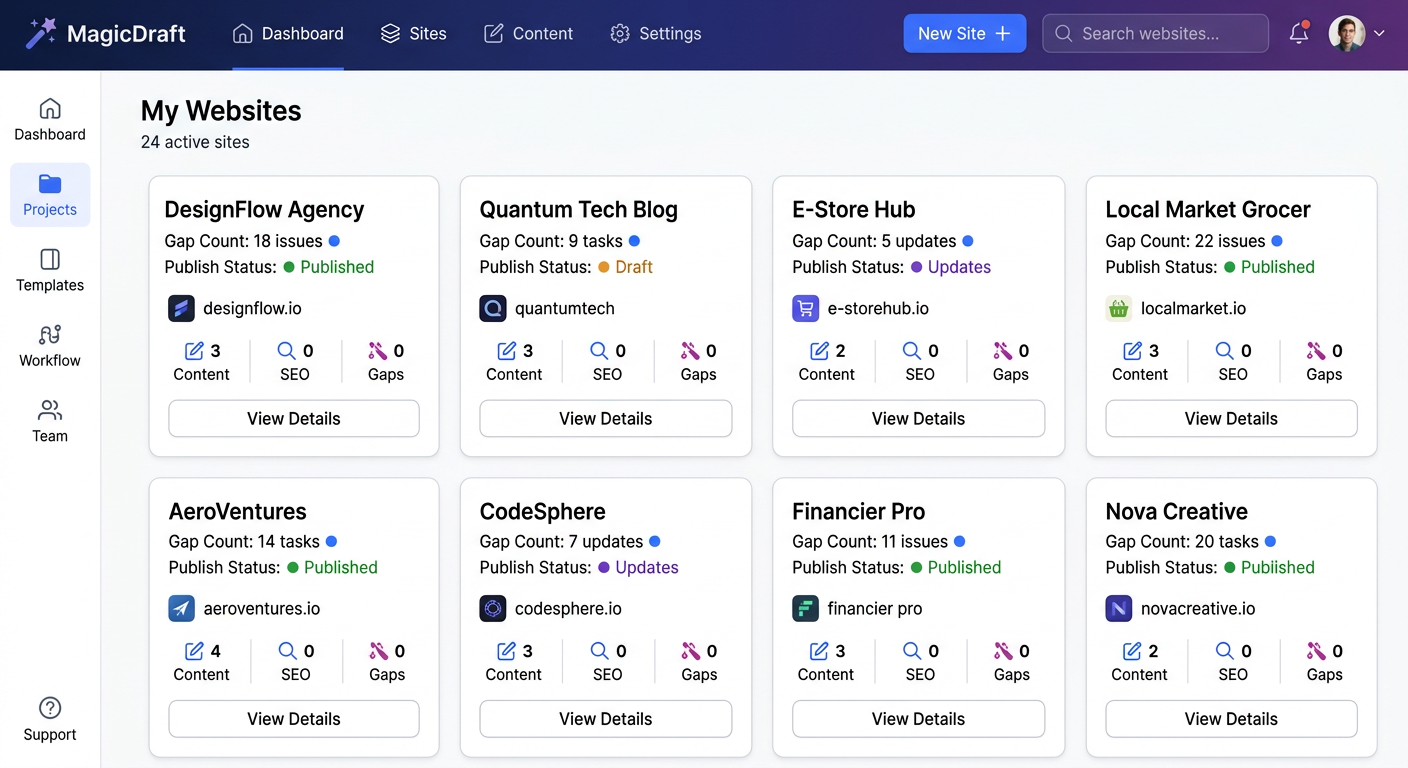
With MagicDraft, each client site connects independently. The tool identifies competitors per site, runs gap analysis per site, and can auto-publish per site — all from one dashboard. The agency shifts from spending 20+ hours per month on topic research to spending that time on strategy and client communication instead.
Content Gaps and Internal Linking: The Compound Effect
Filling content gaps does more than add new pages. It strengthens your entire site’s SEO architecture through internal linking — and this is the part most people underestimate.
Every new post you publish creates linking opportunities in both directions. Your existing posts can link to the new one (passing authority and helping it index faster), and the new post can link back to established pages (reinforcing their topical signals). When you fill a cluster of related gaps at once, you create a web of internal links that signals to Google: “this site comprehensively covers this topic.”
The Math on Topical Authority
Google’s helpful content system rewards sites that demonstrate depth across a topic. A site with 5 posts on email marketing will almost always lose to a site with 25 posts covering every angle — setup guides, tool comparisons, deliverability tips, segmentation strategies, A/B testing, and so on. Each gap you fill adds another signal of expertise. The effect compounds: post #26 ranks faster than post #6 did because the site’s topical authority is already established.
This is why gap analysis isn’t a one-time exercise. It’s a continuous process — your competitors publish new content, search trends shift, and new subtopics emerge. Running gap analysis quarterly (or letting a tool like MagicDraft run it continuously) keeps your content strategy proactive instead of reactive.
Common Mistakes That Sabotage Gap Analysis Results
Gap analysis is straightforward in theory. In practice, several mistakes can undermine the results.
Choosing the Wrong Competitors
Your business competitors and your SEO competitors are often different. A local bakery might consider the shop across the street a competitor, but in search, they’re competing with food blogs and recipe sites. Always identify competitors based on keyword overlap, not business rivalry.
Ignoring Search Intent Mismatches
If a gap keyword has informational intent and you create a product page for it, you won’t rank. Always check the current SERP for a gap keyword before deciding what type of content to create. If the top 5 results are all how-to guides, write a how-to guide.
Publishing Without Quality
Finding 200 gaps and rushing to publish 200 thin posts is worse than publishing nothing. Google’s helpful content system penalizes sites with a high ratio of low-quality pages. Fill gaps with content that genuinely deserves to rank — comprehensive, well-structured, and useful. This is where AI-generated content gets a bad reputation: when it’s used to mass-produce filler rather than deeply researched articles. MagicDraft addresses this by generating posts that include proper structure, relevant data points, and answers to common reader questions — not 500-word summaries that add nothing to the conversation.
Doing It Once and Forgetting
Your competitors publish new content every week. New keywords emerge as search behavior evolves. A gap analysis from January is already stale by April. Build gap analysis into your recurring workflow, not your annual planning session.
Stop Guessing, Start Mapping Your Content Gaps
The feeling of “running out of blog ideas” is almost always an illusion. The topics are there — you just can’t see them without the right lens. Content gap analysis replaces guesswork with a systematic, data-backed process that surfaces exactly what your audience is searching for and your site isn’t covering.
Whether you do it manually with spreadsheets or automate it with a tool, the important thing is to start. Export your keyword data. Identify your real SEO competitors. Find the gaps. Prioritize by opportunity. Publish quality content. Build internal links. Repeat.
Or skip the manual work entirely. MagicDraft analyzes your WordPress site, finds your content gaps, and publishes deeply researched articles on autopilot — so you spend less time staring at a blank calendar and more time watching your organic traffic grow.